
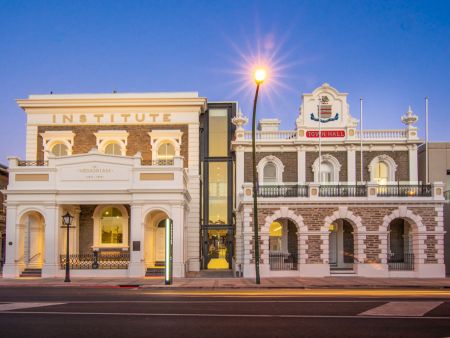
Meetings are held in the Council Chamber, Gawler Civic Centre, 89-91 Murray Street, Gawler. Special meetings are called as required to transact business.
Meetings are open to the public - and the public will only be excluded when considered proper and necessary i.e. the need for confidentiality outweighs the principle of open decision making.
To view Council and Committee Agendas and Minutes click here.
Agendas for meetings are required to be available to each Member of Council at least three (3) clear days prior to a meeting. Agendas (excluding confidential agendas) will be uploaded to the website as soon as practicable following Council Members being provided a copy. of a meeting agenda
Minutes of meetings must be provided to each Member of Council within five (5) days after meetings. Minutes (excluding confidential minutes) will be made publicly available on the website as soon as possible after Council Members have been provided a copy of meeting minutes.
The Chief Executive Officer must, at the request of either:-
- the Principal Member of Council; or
- at least 3 Members of Council; or
- a Council Committee at which at least 3 Members of Council vote in favour of the making of the request, call a Special meeting of Council.
The Chief Executive Officer must be provided with an Agenda for the Special meeting at the time that a request is made (and if an Agenda is not provided then the request has no effect).
Special Council meetings may be held at any time and are generally held in the Council Chamber, Gawler Civic Centre, 89-91 Murray Street, Gawler.
Meetings are open to the public - and the public will only be excluded when considered proper and necessary i.e. the need for confidentiality outweighs the principle of open decision making.
Agendas for special meetings are required to be available to each Member of Council at least 4 hours before the commencement of a special meeting of Council or a Council committee. Special meeting agendas (excluding confidential agendas) will be uploaded to the website as soon as practicable following Council Members being provided a copy.
A review of the reports or documents that have been considered under sections 90(3) and 91(7) of the Local Government Act 1999 is generally conducted once every year. Orders that operate for more than 12 months in duration, must be reviewed once within every 12 month period since the order was made. Council must assess whether the grounds for non-disclosure are still relevant and, if so, provide the relevant grounds and reasons for the minutes and/or documents remaining confidential.
The Confidential Orders Register includes orders for items dating back to 2016 that Council has resolved to retain in confidence.
The Register requires amendment following the yearly review of confidential orders conducted by Council, or as required when meeting documents are resolved to be retained in confidence or documents are released from confidence, such as when the trigger for release is met.
Every endeavour will be made to update the register as regularly as possible subject to resourcing in the Governance Team. At a minimum the Register will be updated following the conclusion of each quarter.
The Town of Gawler welcomes and encourages public attendance at Council meetings, committee meetings, and information or briefing sessions, convened under section 90A of the Local Government Act 1999.
Members of the public can request to speak as a formal deputation or during 'Public Open Forum'.
You need to be aware that although your views are welcomed, you will not be able to take a direct part in the debate on any item.
You can come and go at any time, but please try to avoid disrupting the meeting when leaving. We try and ensure items of public interest are discussed early on in the agenda.
The safety of the public, Council Members and staff is paramount and as such no person, except Council Members and employees shall be permitted beyond the podium.
As a general rule, information is not to be handed out to Council Members at Council and or committee meetings. Any information wanting to be presented to Member requires approval from the Presiding Member before the meeting.
At Council and committee meetings the Presiding Member will make it clear to the gallery that the Council Member seating area cannot be accessed during meetings.
No person shall be permitted to engage in conversation with Council Members or staff during meetings without the express permission of the Presiding Member.
Members of the public are encouraged to have discussions with Members before or after meetings.
Disruptive behaviour will not be tolerated and in accordance with Section 30 of the Local Government (Procedures at Meetings) Regulations 2013 a member of the public behaves in a disorderly manner or cause an interruption they face a maximum penalty of $500.00.
All Members are asked to be mindful of potential safety concerns and bring such concerns to the attention of the Presiding Member or CEO who will then consider what action, if any may be deemed appropriate/necessary.
Anger, rudeness, ridicule, obscene or profane language, impatience and lack of respect for others and personal attacks are not acceptable behaviour.
In the event that the meeting attendees become unruly either individually or as a group where it is deemed that a threat to public safety or to an individual exists, the Presiding Member may suspend the meeting and police attendance requested.
Any person making irrelevant, inappropriate or offensive remarks, who becomes boisterous while addressing the Council, may be cautioned by the Presiding Member and only be given the opportunity to conclude his or her remarks on the subject in an appropriate manner and within the designated time limit at the discretion of the Mayor or the Chair.
Any person failing to comply as cautioned shall not be allowed to remain as part of the public gallery. The Presiding Member, for the purpose of maintaining order and decorum at a meeting, may direct the CEO to escort them from the meeting. Failure to comply could result in police attendance.
Deputations
The Local Government (Procedures at Meetings) Regulations 2013 (the Regulations) prescribe that a person may appear as a deputation and address a meeting of the Council.
Members of the public can request to appear as a deputation, subject to approval by the Presiding Member (Mayor), at an Ordinary or Special Council meeting.
Requests for deputation must be made 48 hours prior to a meeting, in writing to the CEO pursuant to Regulation 11. Requests must include the following information:
- Requestor's Name
- Contact phone number
- The topic of the deputation being requested and if the requestor has addressed Council previously on the topic, the number of times.
Deputation requests including the required information to support the request are to be submitted to Governance in writing, addressed to the CEO via one of the following methods:
- Email: council@gawler.sa.gov.au
- Post: PO Box 130, Gawler SA 5118
- Hand delivered: Town of Gawler Administration Centre, 43 High Street, Gawler East
Topics for deputations should be relevant to an item included on the agenda for a particular meeting. A five minute time limit applies to deputations.
If a request for a deputation is not received within the stipulated timeframe and therefore does not receive approval for a particular meeting, members of the public have the opportunity to appear at council meetings and some committee meetings through the Public Open Forum.
More detail is available in Section 8 Deputations in the Code of Practice for Council and Committee Meeting Procedures which can be accessed via the link at the bottom of this page.
Public Open Forum
The Public Open Forum aims to promote community participation and engagement in the business of the Council, by providing the opportunity for members of the public to address Council and some Committees on any matter.
A Public Open Forum (the Forum) will be held at the following meetings:
- Ordinary Council
- Gawler Youth Advisory Committee
The time limit for the Public Open Forum is 20 minutes. The Presiding Member shall ascertain at the commencement of the Forum the number of persons desiring to speak. The time available shall be allocated to the speakers on equal basis with the provision that a maximum of 5 minutes per speaker.
The Forum shall be chaired by the Presiding Member and speakers shall be asked to observe rulings by the Presiding Member.
A person who has addressed a meeting on a matter via deputation, cannot utilise a Public Open Forum to speak on the same matter again.
More detail is available in Section 10 Public Open Forum in the Code of Practice for Council and Committee Meeting Procedures which can be accessed via the link at the bottom of this page.
Petitions
A petition to Council must:
- be legibly written or typed or printed;
- clearly set out the request or submission of the petitioners;
- include the name and address of each person who signed or endorsed the petition; and
- be addressed to Council and delivered to the principal office of the Council.
If a petition is received complying with the requirements specified in clause 9.1 of the Code of Practice for Council and Committee Meeting Procedures; the Chief Executive Officer shall place a statement as to the nature of the request or submission, and the number of signatures or the number of persons endorsing the petition on the agenda for the next ordinary meeting of Council.
Electronic petitions will be accepted by Council but must meet the following requirements.
- Include the name and address of the supporter of the petition.
- Petition must clearly set out the request or submission for the petitioners.
- Petition must be directed to council by mail or attached as a document or link to an email to council@gawler.sa.gov.au.
How To Present A Petition To Council (234 KB) Code of Practice for Council and Committee Meeting Procedures |
|
|---|
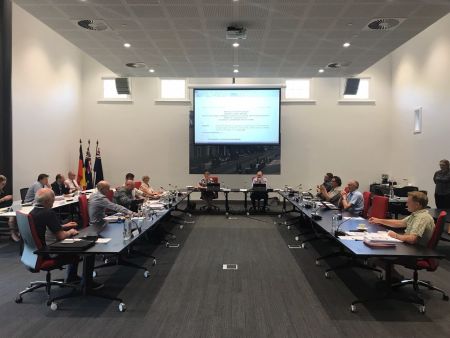
All of a Council’s powers come from legislation. The decision making process for a Council starts with a statutory power or function conferred upon a Council by statute. The way in which a Council makes decisions is by resolutions passed at Council meetings. A Council does not act or make decisions through its individual Council Members but as a whole. However administratively and practically, a Council cannot itself attend to each and every matter and issue that arises for action and determination.
Section 44 of the Local Government Act 1999 (the Act) provides that the Council may delegate a power or function vested or conferred under this or another Act. Some other Acts also contain a specific power of delegation. Section 101 of the Act provides that the Chief Executive Officer may delegate (or sub-delegate) a power or function vested or conferred in or on the Chief Executive Officer and sets out various other matters in relation to delegations (or sub-delegations) by the Chief Executive Officer. A delegation or sub-delegation by the Chief Executive Officer made under Section 101 of the Act may be made to an employee of the Council or to the employee for the time being occupying a particular office or position, a committee comprising employees of the Council, or an authorised person.
To carry out a broad range of its statutory functions, powers and duties Council has delegated to the Chief Executive Officer the power to appoint authorised persons under section 44 of the Local Government Act 1999.
Delegations Register
Committees, Regional Subsidiaries and Working Groups
Committees of Council
Committees have been established by Council under section 41 of the Local Government Act 1999 to streamline Council business processes and facilitate informed decision making.
Gawler Youth Advisory Committee (GYAC) - GYAC Terms of Reference
Gawler Heritage Collection Committee (GHCC) - Terms of Reference & Nomination Form
Gawler Business & Economic Development Committee - Terms of Reference
Meetings are open to the public and the public will only be excluded, where the need for confidentiality outweighs the principle of open decision making.
Other Committees
- Audit & Risk Committee Established pursuant to section 126 of the Local Government Act 1999 Terms of Reference
- Council Assessment Panel (CAP) Established pursuant to sections 82 & 83 of the Planning, Development and Infrastructure Act 2016 CAP Operating Procedures and Terms of Reference
- Building Fire Safety Committee Established under section 157 of the Planning, Development and Infrastructure Act 2016 Terms of Reference
- Chief Executive Officer Performance Management Panel Terms of Reference
Regional Subsidiaries
Regional subsidiaries are established under section 43 of the Local Government Act 1999.
- Gawler River Floodplain Management Authority
- Northern Adelaide Waste Management Authority
Advisory & Working Groups
- Elderly Centre Advisory Working Group - Terms of Reference
- Reconciliation Action Plan (RAP) Working Group - Terms of Reference
- Ageing Well Advisory Group - Terms of Reference
- Football & Associated Sporting Clubs Future Infrastructure Needs Working Group - Terms of Reference
- Regional Public Health Advisory Group
Members of the public are welcome to attend meetings.